For ten years, I heard the same word used to describe the organisation I worked for: FAMILY. It was in speeches, induction packs, leaving cards, the language leaders reached for whenever they wanted people to give more than the job required. I have a family of my own. It looks nothing like that word was ever supposed to mean there, and for a long time, I let myself believe it anyway.
I was given a huge amount by that organisation. Roles. Promotions. Support to get external qualifications. Genuine investment in my development, the kind that shapes a career. I won’t erase that, because it’s true and because it makes what came after harder to explain, not easier.
Here’s what was also true: every real decision, every piece of power that actually mattered, sat with one person. Not everyone got the opportunities I got. The story of growth and generosity was real for some of us and not for others, and the difference had very little to do with merit.
I don’t think business should call itself family. I love my family unconditionally, the noise, the chaos, an ordinary weekend with all of us squashed onto one sofa, no conditions attached. I don’t expect that from the people I work with, and I don’t think they should expect it from me. What I expect from colleagues is accountability, good work, and honest relationships and I’ve built plenty of those, inside and outside that organisation. But when I had to stand up as a responsible person and say something was wrong, none of the people who’d used the word “family” for a decade were standing anywhere near me. They haven’t been since. So whatever that organisation was, it wasn’t that.
I spoke up because I watched the stated values of that company get quietly put aside, for money, for ease, for whoever was inconvenient that quarter, while the language of those values stayed exactly the same. I spoke up because I saw people suffer for it. And then I spoke up because I was one of them.
I don’t think what I did was brave. I think it was the right thing to do, and I still think that now, on the other side of it. It cost me one of the hardest years of my career, maybe of my life. I lost sleep, I lost certainty, I lost confidence, not in what I’d done, but in my own judgement about people, about who was actually safe to be honest with in a room. I lost the easy version of the story I used to tell about the place I’d given ten years to. I know things were said about me, during and after, that I didn’t get to hear and can’t correct. That still hurts, if I’m honest. I thought there were people in that building who knew me well enough not to believe it. Maybe once, some of them did. People change. People move on. I’ve had to make peace with that rather than resolve it, because resolution was never really on offer.
The cost wasn’t one thing. It was financial: principle doesn’t come free, and mine didn’t. It was personal: friendships I’d have called solid for years went quiet, one at a time, without ever properly ending; people I’d supported, mentored, covered for, found reasons not to be around; and it took me a long time to stop scanning every relationship for who might do that next. And it was professional: I know how these things travel quietly, in rooms I’m not in, to people who never once asked me for my side.
Would I do it again? Yes. Without hesitation. Not because the cost wasn’t real, I still feel all three parts of it. But because I try to live my values rather than just talk about them, and it would be a strange kind of hypocrisy to build a business on integrity while quietly deciding my own integrity wasn’t worth what it cost me. I want other people to speak up when something is wrong. That’s a large part of why I do this work now. And I can’t ask that of anyone if I wasn’t willing to do it myself, at full price.
I’m not telling this story for sympathy. I’ve had enough of that offered to me already, and it was never quite what I needed. I’m telling it because there’s a difference between building a culture-and-leadership business as someone who watched all this from a safe distance, and building one as someone who lived inside a culture that quietly harmed a lot of people and did something about it, at real cost.
I didn’t build ELEV8 as a witness. I built it as someone who was deeply, personally affected by what happens when an organisation’s stated values stop being lived and nobody with power is willing to say so out loud. That’s not a case study I read about. It’s ten years of my working life, and the hardest year inside it.
The point was never who did this, or where. It was the pattern: the gap between what a place says about itself and what it actually does when someone inconvenient tells the truth. I’ve seen that gap up close. I know exactly what it costs the people standing in it.
That gap is why ELEV8 exists. Not because I read about culture going wrong somewhere and found it interesting in theory. Because I lived inside it, paid for it, and came out the other side still believing it’s fixable, if someone is willing to look at it honestly. The frameworks came after. The reason came first.
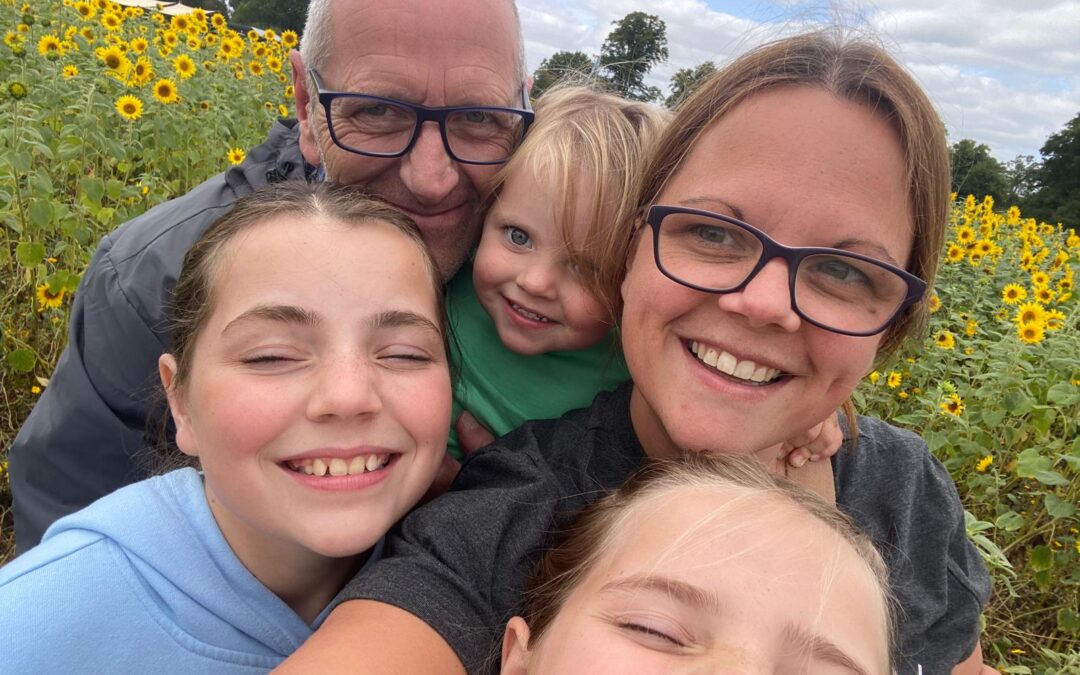
None of that happened without the people in that photo and the people who aren’t in it but carried me through all the same, my brothers and my mum. They brought me through this to somewhere better, and I will not take that for granted again.
I always said family came first. In my heart, they did. But for a long time, I gave too much of myself away to a place, and to work, to actually be living that. I can see it clearly now. It’s changed, not because any of this happened to me, but because I made the choice to change it. I keep making that choice, every day.
If you’re lucky enough to have family like mine around you, make sure they know it. More importantly, make sure they feel it, because there is only one place in this life where you are not replaceable, and it’s with them.
Amy Fowles is the founder of ELEV8. Mum to three crazy, incredible girls, and wife to Simon, her long-suffering husband. She works with values-led organisations on culture, leadership, and the slow work of building healthier workplaces. If you’d like to talk about your organisation, you can reach her at amy@elev8yourculture.co.uk or via elev8yourculture.co.uk