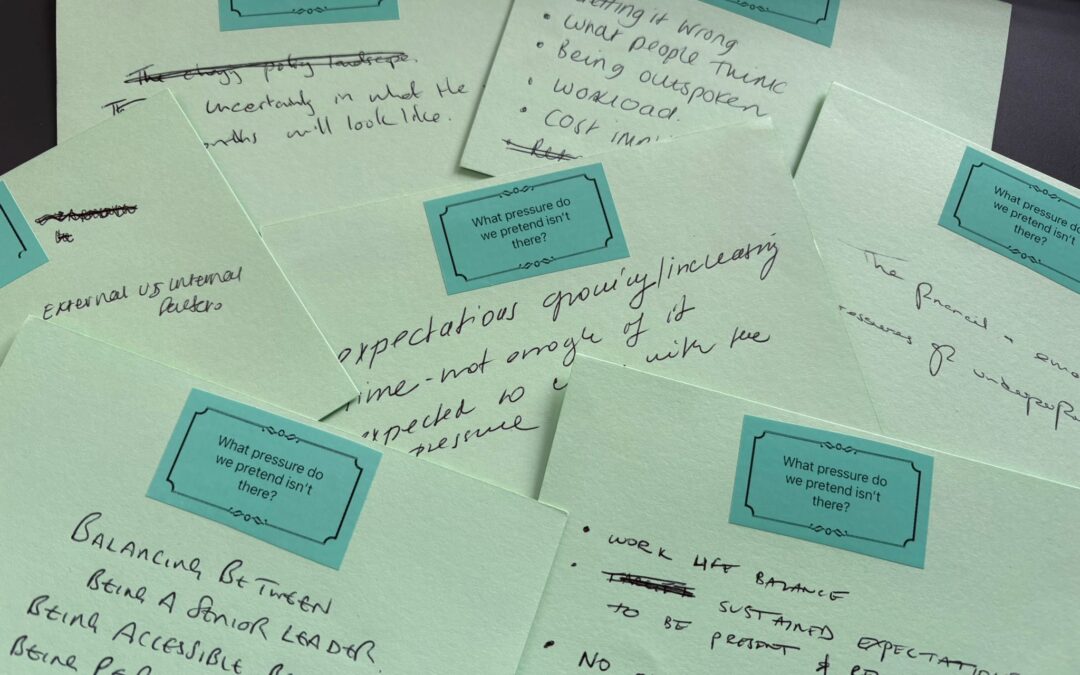
I’ve sat in more “you said, we did” meetings than I can count, and here’s what I’ve noticed: most of them should be called “you said, we noted.”
There’s a pattern I see walking into almost every provider I work with, regardless of size, region, or sector. Leadership runs an engagement survey. Scores come back. Someone builds a slide with three headline actions. It goes out in a newsletter. Then, quietly, everyone waits for the next survey to do it all again. The listening isn’t broken, it’s the acting that never quite arrives.
The eight-month gap
Ask any principal or CEO if they listen to their staff, and they’ll say yes, genuinely believing it. Ask the staff, and you’ll often hear something closer to: “They ask, but nothing changes.” That gap, between leaders’ intent and colleagues’ lived experience, is one of the most consistent things I find in my work.
It isn’t usually dishonesty. It’s timing. A survey closes in October. Results land in December. An action plan gets built for the January SLT away day. By the time anything visible happens, it’s March, and staff have long since filed the whole exercise under “nothing came of it.” The feedback loop is too slow to feel like a conversation, so it reads as a formality instead.
The fix isn’t a better survey tool or a slicker dashboard. It’s treating staff voice as an ongoing practice rather than an annual event — small, visible, fast responses that show people their words moved something, even in a small way, within weeks rather than months.
What actually rebuilds trust
The companies I’ve seen shift this fastest don’t do anything complicated. They pick one or two things from the feedback that are genuinely fixable within a fortnight, often small, sometimes almost embarrassingly minor, and they fix them loudly. Not “we’re reviewing this,” but “you told us the staff room kettle’s been broken for six weeks, it’s fixed, here’s a photo.”
That sounds trivial. It isn’t. Small, fast, visible action does more to convince people that voice matters than a beautifully designed twelve-month improvement plan ever will. Trust gets built in the small stuff, because the small stuff is what people can actually verify with their own eyes. Once colleagues believe the small things get fixed, they extend credit on the bigger, slower things, workload, , capacity, resources, because they’ve already seen the mechanism work.
Providers who skip straight to the big strategic actions and leave the small stuff untouched tend to find their next survey response rate drops, and the qualitative comments get sharper and more cynical. People aren’t disengaging from the topic. They’re disengaging from a process that’s asked them the same question three times without visibly changing anything.
Where this sits in the wider culture
This is really a Leadership Behaviours issue wearing a Communication & Voice costume. Surveys don’t build trust. Behaviour does. A leader who responds to feedback quickly and visibly is demonstrating, in a very concrete way, that colleagues’ input carries weight in this organisation. A leader who commissions a beautiful action plan that lands eight months late is demonstrating the opposite, no matter how sincere the intention behind it was.
If I had to pick the single highest-leverage change most providers could make this year, it’s this: shorten the gap between “you said” and “we did” to something staff can actually feel. Not a full annual cycle. Weeks. And make the first visible actions small enough that they can’t slip.
A question worth sitting with
Next time your engagement results land, before you build the twelve-month plan, ask a smaller question first: what’s the one thing we could fix by Friday? Do that one, tell people loudly that you did it, and then build your bigger plan on top of that credibility – not instead of it.
Amy Fowles is the founder of ELEV8. Wife to Simon, mum to three girls – one who the education system is not made for, one who’ll argue a point of principle until she’s right, one who’s three years old and already runs the house.
She built ELEV8 after learning the hard way what it costs when an organisation’s values are just words on a wall. Now she helps other leaders close that gap before it costs their people too.